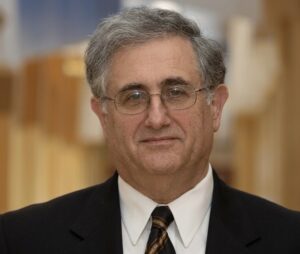
Eugene Litvak, Ph.D.

President and CEO of IHO

Hospital C-suites today are under extraordinary pressure: margins are thinning as Medicaid reimbursement falls, Emergency Departments are dangerously overcrowded, nurses and physicians are burned out — and leaving hospitals in droves, surgeons face growing roadblocks to OR access and to placing post-surgical patients in appropriate wards.

The consequences are severe.

  • Avoidable patient deaths. The tragic death of Lewis Blackman — painfully documented in the Prologue to the Joint Commission Resources book remains a stark reminder of what system failures can cost.
  • Hospitals continue to lose substantial revenue while capacity sits paradoxically idle.

To address these challenges, most expert and consulting attention today is focused on two areas:

  1. Payment reform (e.g., replacing insurance with health savings accounts)
  2. Employing Artificial Intellect

Now imagine that these recommendations were fully implemented, and yet:

  • Emergency Departments would still remain overcrowded
  • Nurses and physicians would still be burned out
  • Surgeons would still face limited, delayed access to ORs — and hospitals would continue to lose patients after successful operations, just as in the Lewis Blackman case
  • Why? Because the root cause remains untouched. Across hospitals, patient flow is fundamentally mismanaged — driven largely by periodic, man-made peaks and valleys in the volumes of elective admissions. These fluctuations reduce efficiency, create artificial congestions, or alternatively leave beds, staff, and ORs underutilized.

Rigorous analysis shows that variability in elective admissions and discharges — not emergency demand — drives the capacity crisis: “An Analysis of New York Data: Fluctuations in Hospital Capacity Are Driven by Variability in Elective Admissions and Discharge Activity.”

Until these peaks are smoothed, every problem above will persist — regardless of how advanced the payment model or AI tools may be. This is not theory. It is documented in:

Hospital executives — especially CEOs, COOs, and CFOs — along with surgeons, ED clinicians, and nurses, the sooner you implement patient-flow smoothing, the more lives you will save, the better the work environment you will create, and the further you will move away from the financial cliff.

Every hospital that has implemented this intervention has:

Reduced avoidable mortality and improved margins

From several million dollars to over $100 million

Decompressed Emergency Department overcrowding

Lowered nurse turnover and improved access to ORs and inpatient beds

More case studies and evidence are available at www.ihoptimize.org.

The crisis is real. The solution is proven. If I were a hospital CEO, I would compare the ROI of patient-flow smoothing with the ROI achieved through other interventions, innovations, or consulting services. If those alternatives delivered better results, I would ignore this letter. Otherwise, I would explore this intervention further — by visiting www.ihoptimize.org or by registering for our forthcoming free Webinar.

Visit ihoptimize.org

Eugene Litvak, Ph.D.

President and CEO of IHO